Owner:
- Kaiser, Wenzelaus (master shoemaker)
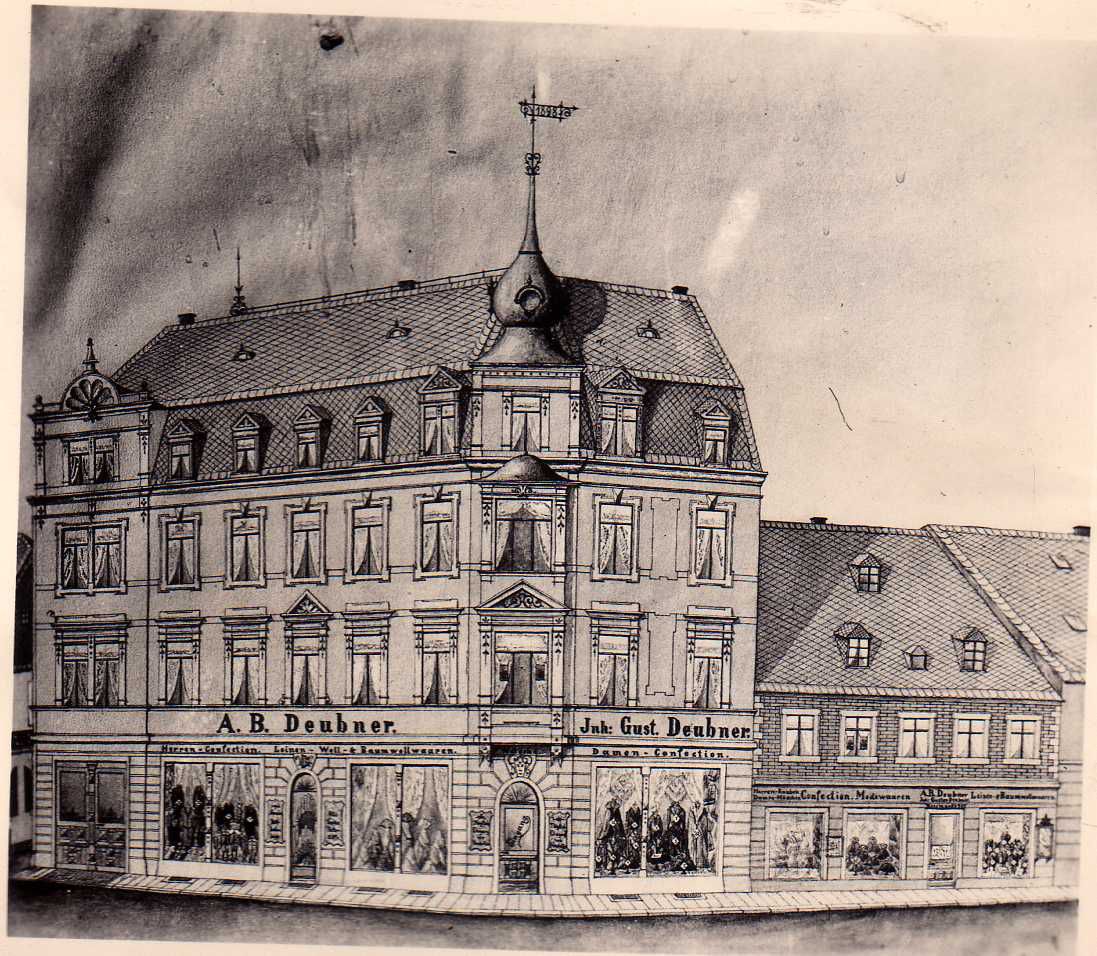
- Deubner, Franz Gustav (merchant)
- Pester, Oskar
- Mr. Wolf
- City of Stollberg
historical data:
- 1877 Apartment installations by Mr. Kaiser
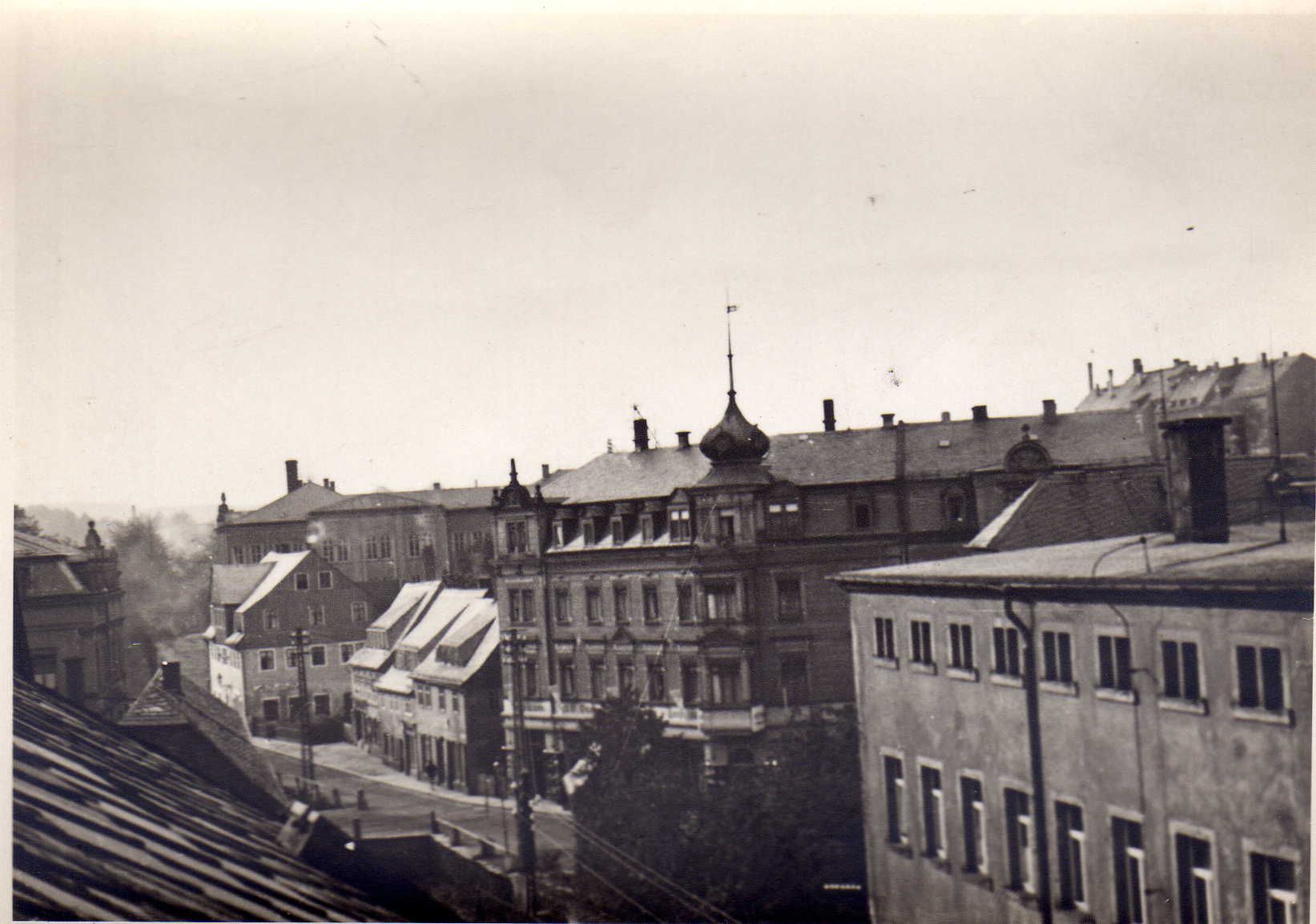
- Acquired by Franz Gustav Deubner in 1897
- 09/1897 Mr. Deubner intends to demolish the house and build a new residential and commercial building on the same site. He asks for approval as soon as possible, as he wants to start demolition work this year.
- 09/1898 first received approval
- 1908 New owner Pester intends to add a kitchen exit (balcony).
Stollberg already had a hot tub bath in 1860, located next to the outdoor pool in Stollberg. Medical baths, cold and hot baths were already offered there at this time.
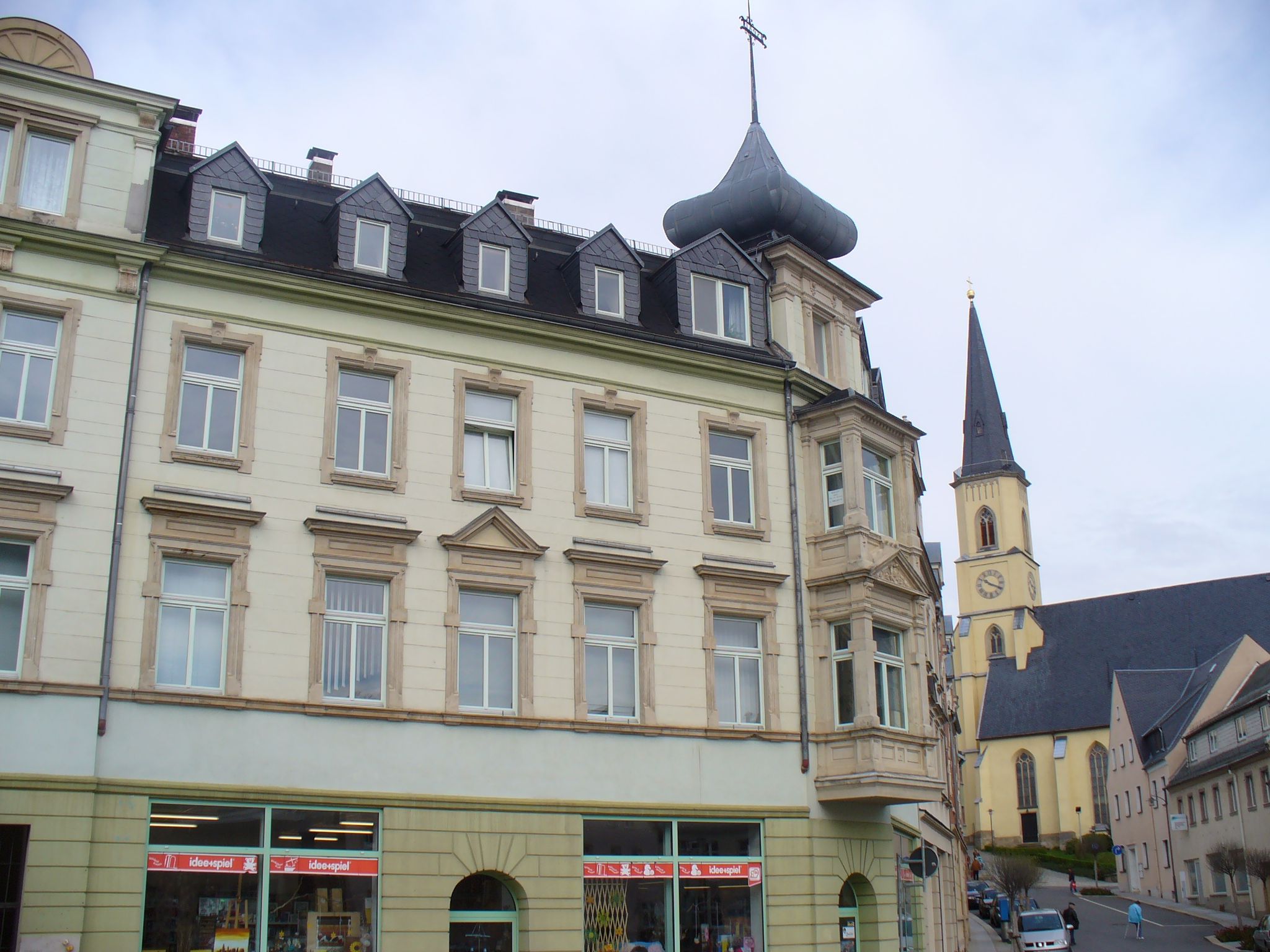
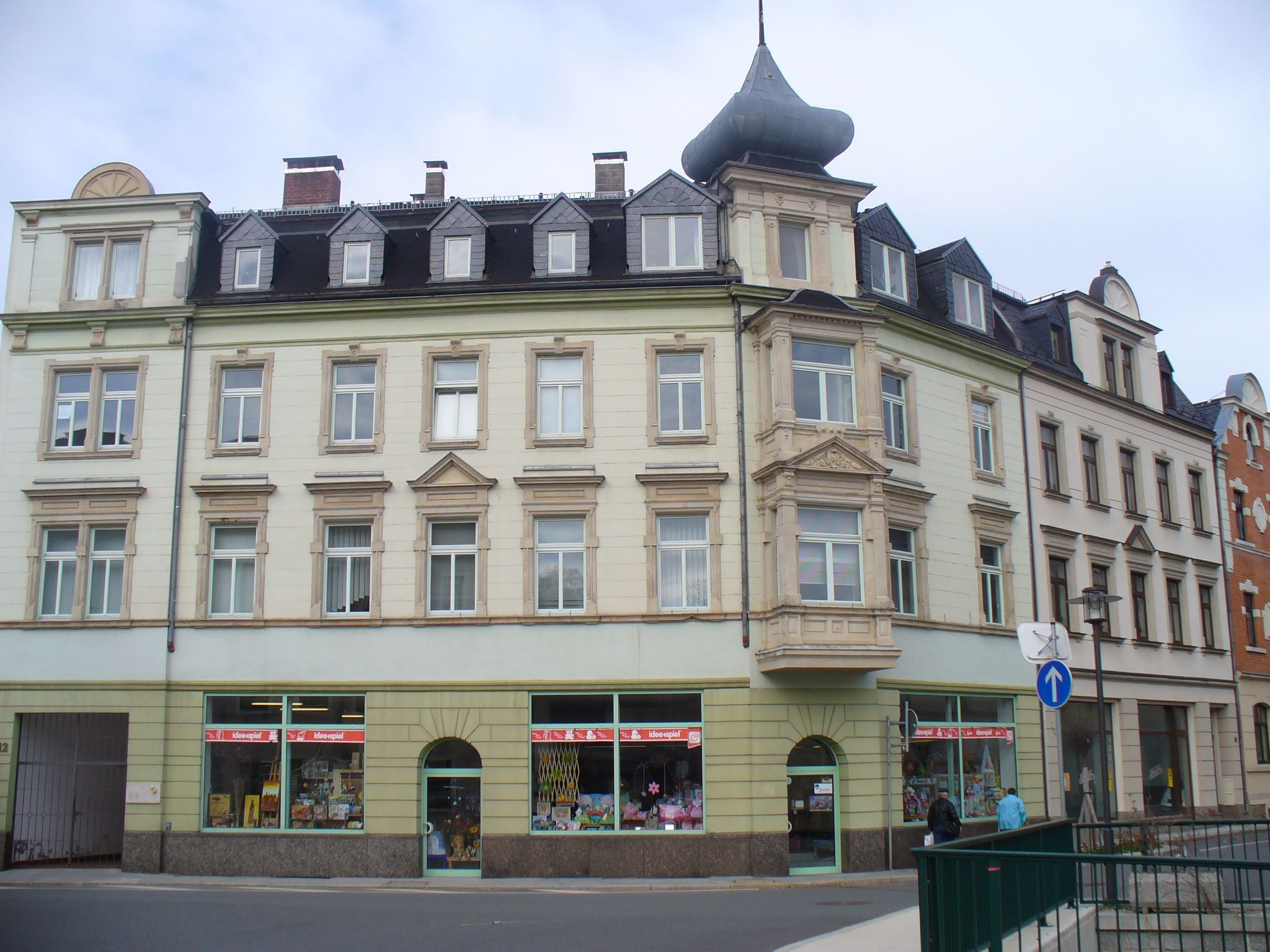
The new municipal baths were built in 1935 in the vacant commercial building, which has beautiful architecture. The municipal baths opened on 01.02.1938. The front façades are faced with Württemberg shell limestone and stucco patterns adorn the façade. While the baths and other rooms could be described as very good by the standards of the time, the boiler house, coal bunker and boiler room were by no means up to standard even then.
After 1945, when the facility had to be heated mainly with raw coal, the conditions in the boiler rooms were so bad that the stoker fell ill and the Labour Office Inspectorate and the Office for Hygiene closed the entire baths in 1954.
1957 most of the outdated residential buildings were without a bathroom, making the baths one of the most urgently needed sanitary facilities in the city. After all, 18,000 baths were administered in the Wannenbad every year.
There was no alternative, which is why the baths had to be temporarily reopened. The planned new building failed in 1955 due to insufficient water conditions at the construction site.
In 1956, the council of the Karl-Marx-Stadt district, the council of the Stollberg district and representatives of the Stollberg town council inspected the baths again. The commission came to the conclusion that the bathing facilities were sufficient and could still be considered up-to-date after a general overhaul. As an increase in capacity was not necessary, only the boiler rooms and boiler system would have to be changed. The funds required for this would barely reach 50% of the costs of a new building. The city council then commissioned the architect Erhard Bach to plan the conversion.
At this point, the conditions under which the colleagues at the Wannenbad had to work were actually irresponsible. In order to save costs, the Mehlhorn couple, who had run the baths for many years, agreed to wash the blankets and towels themselves year after year.
From 1959 to 1964, the boiler room was extended and deepened and a new chimney was built for the purpose of installing a new low-pressure steam boiler system.(03.07.1975)
In 1965, urgent painting work was carried out.
After the changing times made the bathtub bath no longer necessary, more attention was paid to medical baths. Later, there was also an increased demand for physiotherapy treatments. One day, however, the premises could no longer be used for this purpose.