Historical outline
It is not known when Hoheneck Castle was first built. It probably coincides with the founding of the town of Stollberg. Historians give the period from 1200 to 1240. In any case, there is a first documentary mention of the castle in 1244 and old maps depicting Germany before 1273 show a dominium (lordship) of Stalberg. This dominion formed Stollberg with around 12 villages (Hoheneck as an independent village at the time, Zwönitz, Auerbach, Thalheim, Hormersdorf, Dorfchemnitz, Erlbach, Nieder-, Mittel-, and Oberdorf, Ober-, and Niederwürschnitz).
A lord of the castle, Erkenbert VIII, is named in a document as Burggraf von Staleburgk in 1287. In 1365, a stay of Emperor Charles IV at the castle is mentioned. In 1366, the lordship of Stollberg was sold to the emperor's son Wenceslas in Bohemia in his presence. The castle burnt down in 1399. The manor became Wettin in 1423, but was still considered a Bohemian fiefdom. In 1473, the Bishop of Meissen, Dietrich IV von Schönberg, bought the lordship of Stollberg together with his two nephews Heinrich and Caspar. 14.06.1557 is the date on a crucifix which was donated on 27.06.1557 by Heinrich von Schönberg, owner of Hoheneck Castle, and found its place in the cemetery.
The manor may have owned significant plots of land in ancient times. According to a note from an old purchase book, Heinrich von Schönberg "gave the Heiligenholz with fields and meadows to the council here in 1558. In 1563, purchase negotiations began with the Saxon Elector August I and in 1564, Wolf von Schönberg transferred Stollberg to the Elector August I by means of a purchase contract for the castle and estate. He reserved only Zwönitz, Oberwürschnitz and Niederwürschnitz for himself. The latter two places came under the rule of Oelsnitz.
In 1587, the castle was in a state of severe decay and on 06.06.1602 it burned down. Around this time, Wolf von Breitenbach was the electoral bailiff and at the same time the leaseholder of the chamber estate next to the castle. After the fire, he carried out his official duties in the office room of the badly damaged office building, which was no longer possible for him. He therefore had to live in the living room of the one-storey cattle house, which he had to share with the servants. He therefore asked the Elector "to be allowed to set up a room and chamber above the old chancellery in the castle ruins. Breitenbach died at the age of 24 and was buried under the altar of St. Jacob's Church. Between 1606 and 1609, the new official residence was built in the front part of the castle "near the bridge". In 1610, the new leaseholder of the Kammergut quarrelled with the new Amtsschösser Melchior Blüher over the right to live in the new Amtshaus.
In 1622, a section of the wall was washed out by a devastating flood, causing a large section to collapse. 1633 was the darkest day for Stollberg: Holck's Croats burned the castle and town to the ground. In 1647, when Eger was captured, a number of soldiers from the Chemnitz garrison were ordered to the castle "because of the danger" and had to be supplied by the town.
In 1702, Friedrich Nester from Dresden acquired the castle's outbuildings from the Elector for 10,000 guilders. In 1752, the Saxon state bought the estate back.
The castle slowly fell into ruin and became a quarry. In 1744, the bailiff Liebe even had stones removed from the tower for his own buildings and repairs. The office building had also become uninhabitable and was relocated in 1770 as the "Amtsexpedition" to what is now the bookshop on the market square. From 1803, it appeared as the "Neues Amtshaus", built on two sites near today's Tränkner drugstore. In the great fire of 1809, it was ravaged by flames and valuable judicial records of a town with supreme jurisdiction were lost. Afterwards, the office building was rebuilt, but next to the castle(from 1812 to 1819).
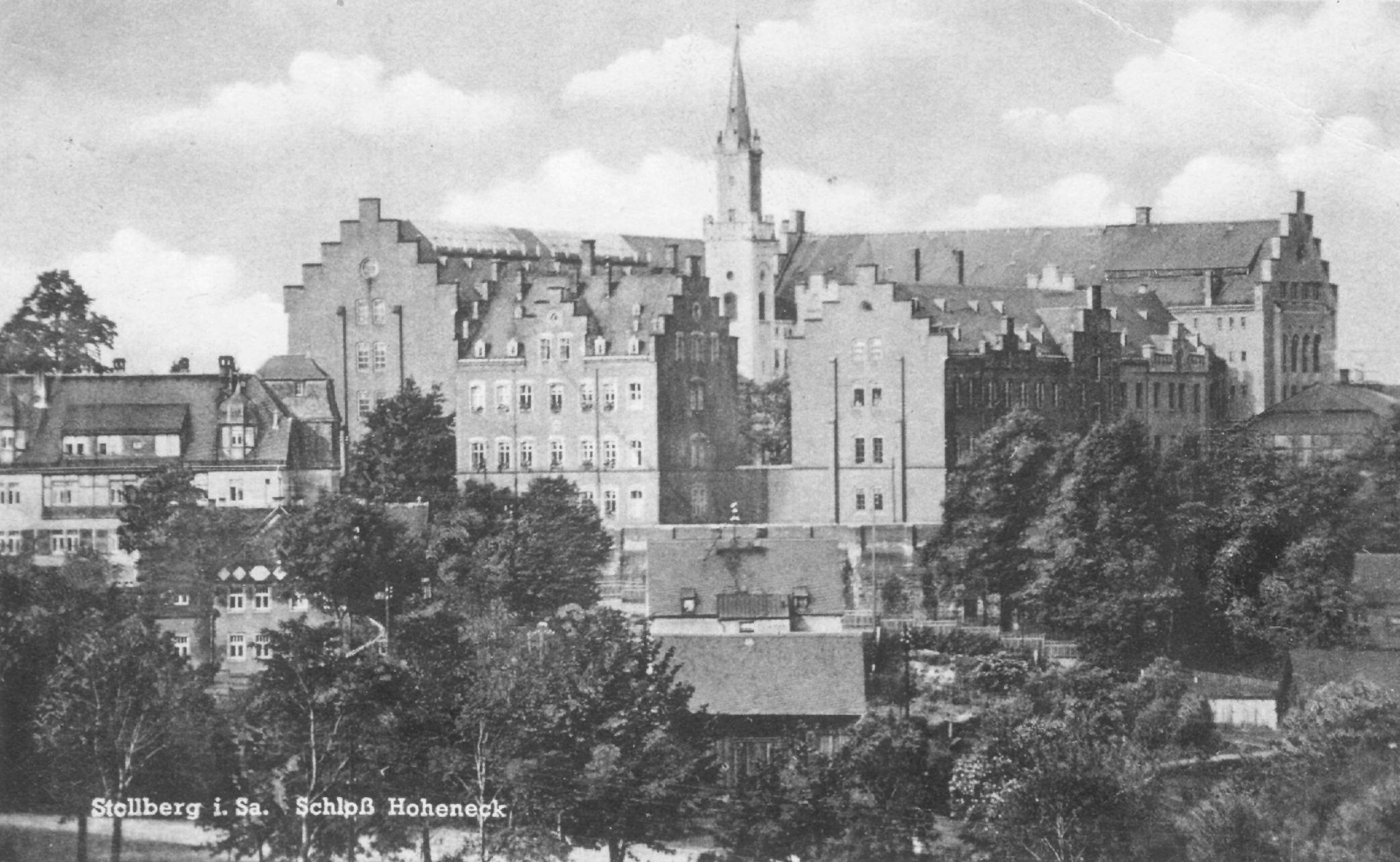
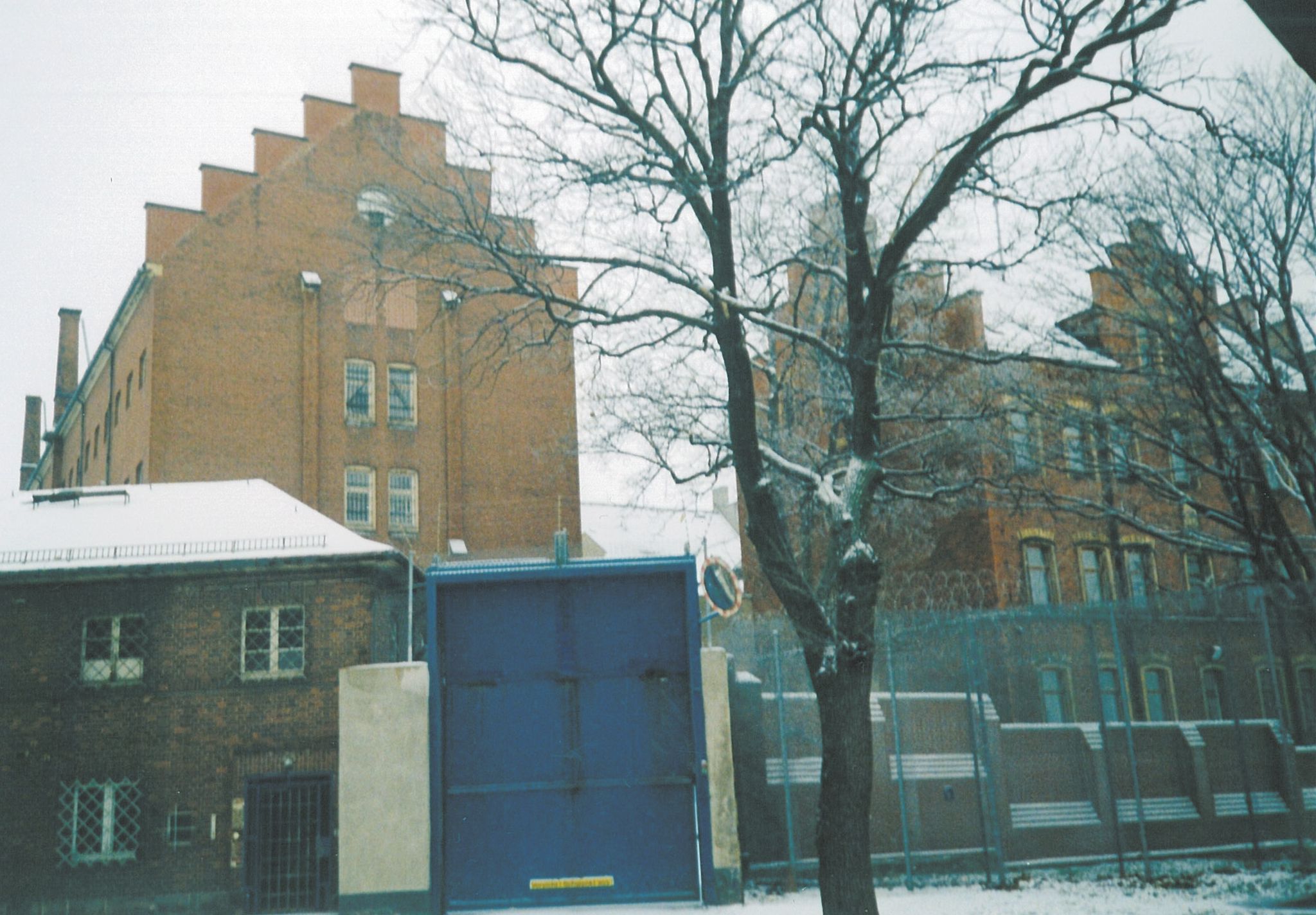
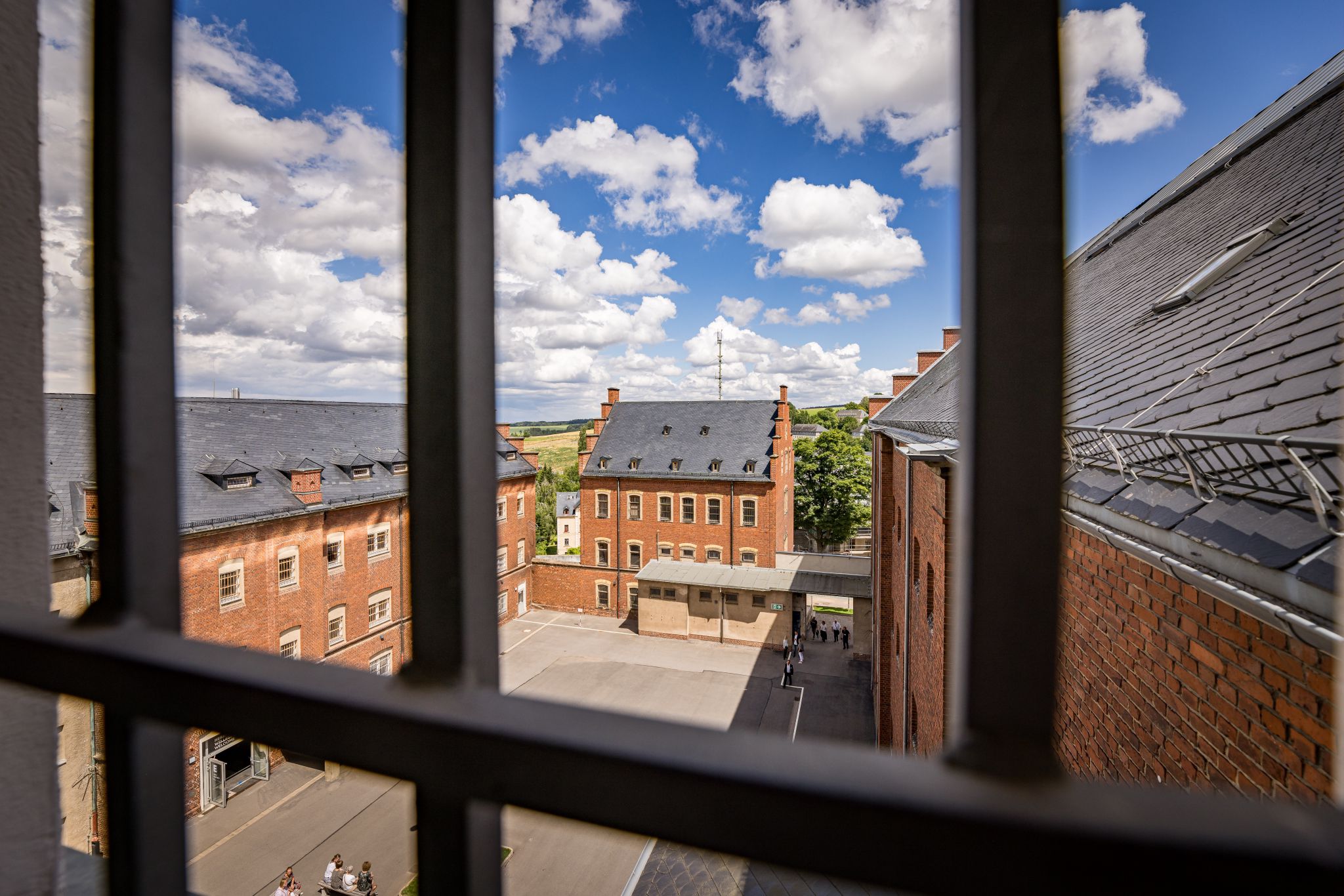
In 1771, the castle fell completely into ruins and remained a ruin until 1811. The castle was not rebuilt until 1815. On 01.09.1816, the Justice and Rent Office was relocated to the newly built office building. In 1864, Hoheneck Castle was opened as a prison. Until then, the district court was located there. From 01.06.1874, Hoheneck Prison was used exclusively for the execution of prison sentences on female criminals. In 1886/87 , the castle was given its present appearance after further renovations.
In 1889, Hoheneck is converted into an auxiliary prison for Nossen and in April of that year, Nossen prison is moved to Hoheneck. In 1948/49, a section for female prisoners was set up. In 1950, around 1200 women interned in Sachsenhausen and sentenced by the Soviet military administration were transferred to Hoheneck.
On December 16, 1989, there was an amnesty for 126 politically imprisoned women in Hoheneck. In September 1990, the first newspaper reports of strikes and suicide threats by prisoners who felt they had been ignored by the amnesty were published and there were subsequent revolts in all state prisons in the former GDR. People complained about the staff, the miserable food, there was no social therapy and no adequate psychiatric care. There were also considerable social problems and no more work for the prisoners. As a result, Veit, the prison governor at the time, left office along with 30 other employees.
On 29.06.1993, the former Hoheneck women handed over a collection of books on the history of the prison system in Hoheneck to the town. In 1994, a men's section was set up and extensive renovation work was carried out. In 2001, the Saxon Ministry of the Interior closed Hoheneck Prison.