Half-timbered house at the market
The records show that the first owner was named Ebert. In May 1865, a master builder, Mr. Johann Traugott Bochmann, intends to build a workshop extension and a chimney alteration, in solid construction. The roof of the extension was to be enclosed with zinc sheeting. On August 21, 1896, a master watchmaker, Paul Opelt, requests permission to make structural changes to his property. He would like to install a store and build a courtyard enclosure. He is also allowed to use municipal land on his property as a store room for 50.00 marks. On 04.11.1903 a Hermann Kunze appears. He is a bricklayer and wants to rebuild a store. Then on November 19, 1903, he applies for the entrance to be relocated. The new entrance is to cross municipal land and he applies for permission to do so. On 02.12.1903, he applies for permission to install a shop window.
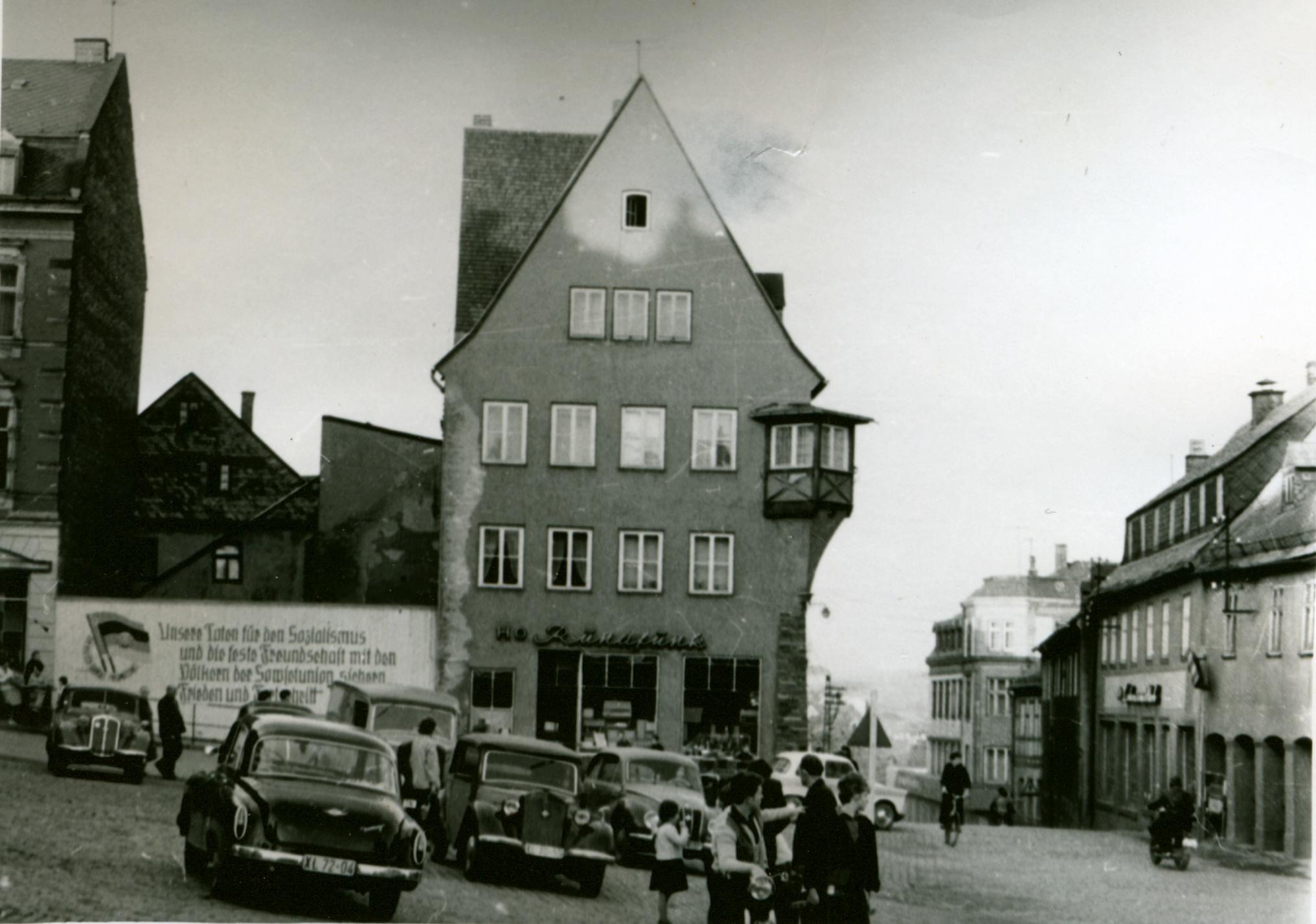
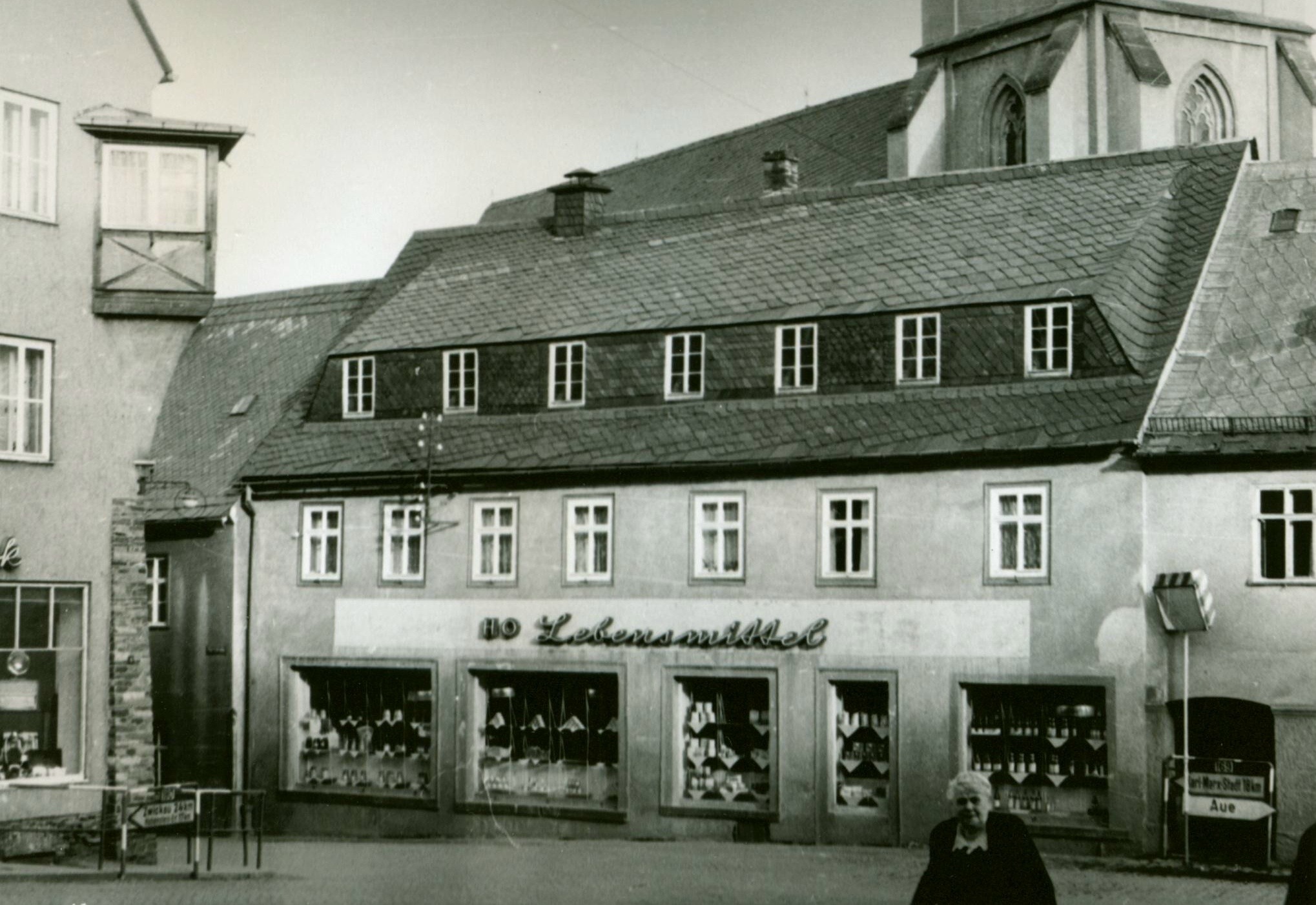
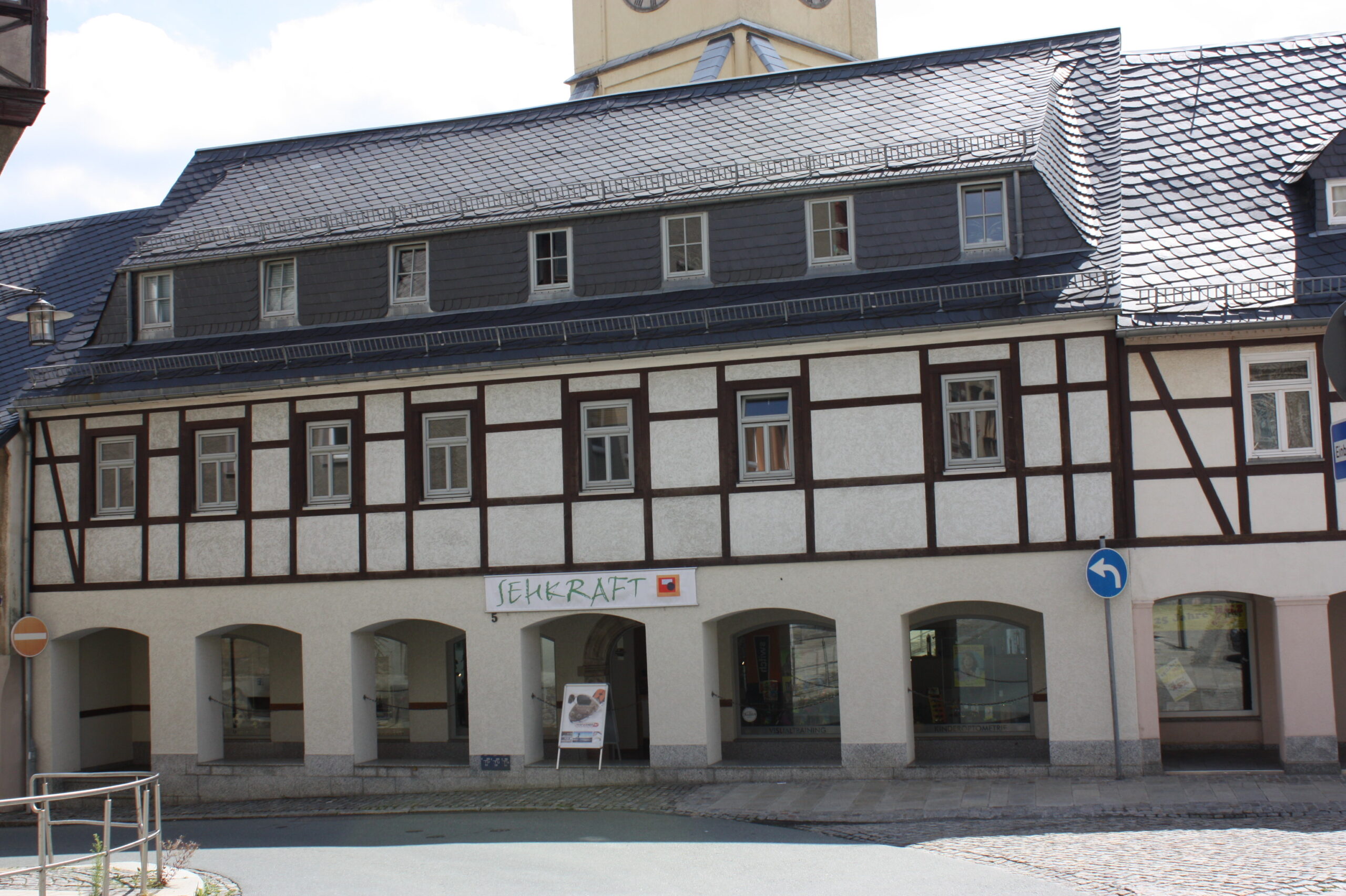
Mr. Kunz appears as a master stove fitter on 9 April 1948. His house was badly damaged by shelling and so he wanted to renovate his partially destroyed façade and brick up two windows and a door. A construction drawing dated 20.05.1952 shows a covered arcade 10.38 m long (the colonnades). These were built for the HO grocery store at the time. It was popularly known as Ketten-HO because of the chain barrier that was installed between the pillars. The "Delikat" shop was later located in the building. After the fall of communism, it was rebuilt and now houses two stores.
This house should not be overlooked when walking through the town. However, the gable facing the district court has been preserved despite many conversions (listed building!). It shows us all the intimacy of small-town architecture in the early 19th century. The small, cozy bay window is simply priceless! The sight of the bay window together with that of the house of the district court opposite makes the architectural charmlessness of later building activity on Stollberger Markt doubly clear to any observer who is still somewhat sensitive.
Renovation work on Kalwis residential/commercial building, Hauptmarkt 6
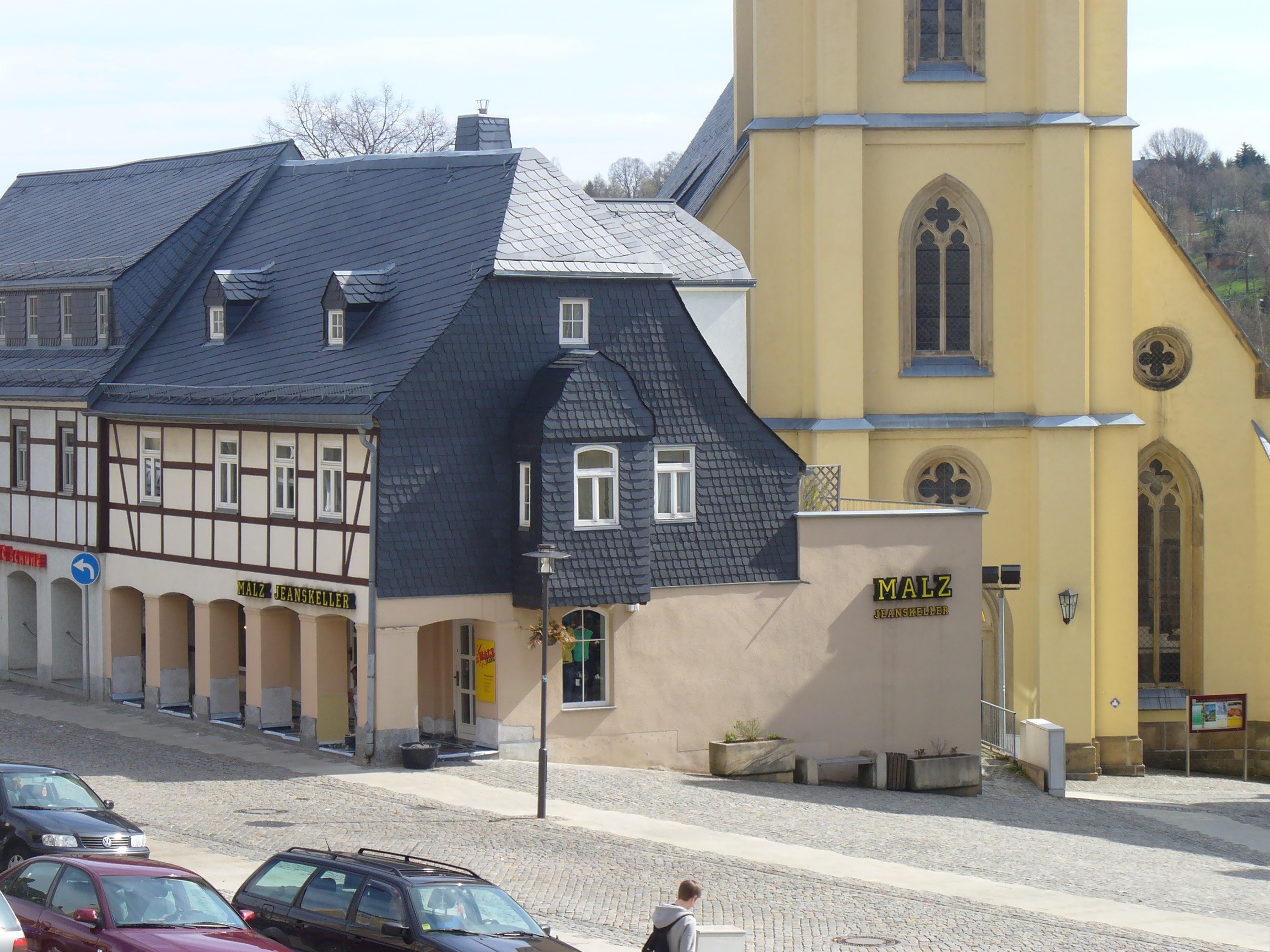
The owner Günter Malz began renovation work on this house in 2005. He intended to replace the asbestos slates with natural slates and renovate the chimney.
An application for a listed building permit was submitted to the district office. According to a letter dated May 23, 1995, the building was classified as a cultural monument within the meaning of Section 2 of the Saxon Monument Protection Act of March 3, 1993. In agreement with the Saxon State Office for the Preservation of Monuments, approval was granted under monument protection law with conditions regarding the conversion and maintenance measures. These include
- New roof covering, gable facing the main market square and bay windows in natural slate and in historic form
- Replacement of the historic windows with local wood to the same dimensions as the existing windows, muntin bars and profiles are to be copied, the design as double-glazed windows is approved, color white
- Repair of the exterior plaster; in the case of partial renewal, the plaster must be adapted to the existing plaster (smooth plaster)
- The color restoration of the façade must be coordinated with the monument protection authority (acceptance of a test axis)
- New construction of an entrance door to the salesroom, version I in local wood, color white
- The bay window in the southern part of the house must be preserved and renovated
The construction work was carried out by the company Pelz in Oelsnitz.