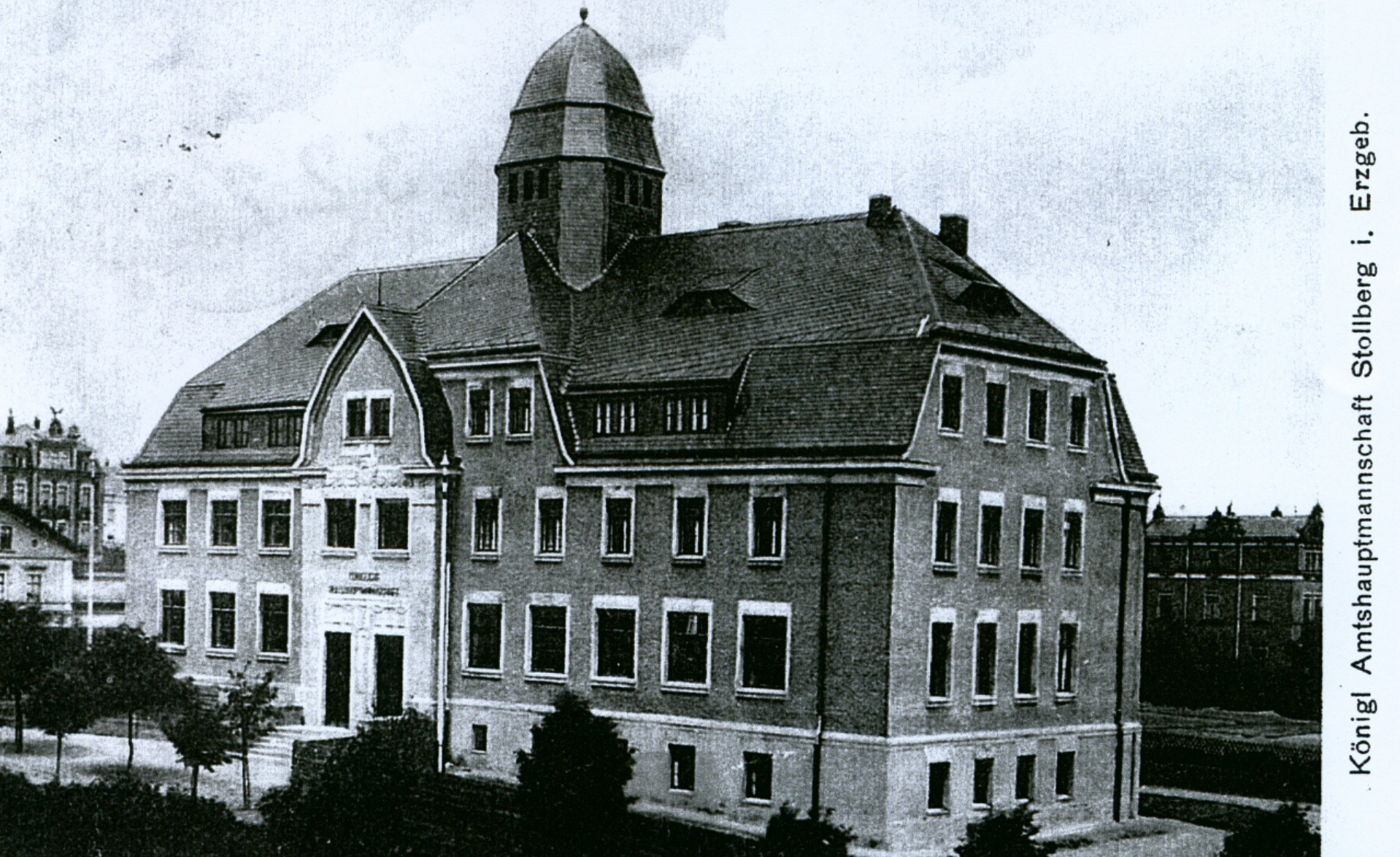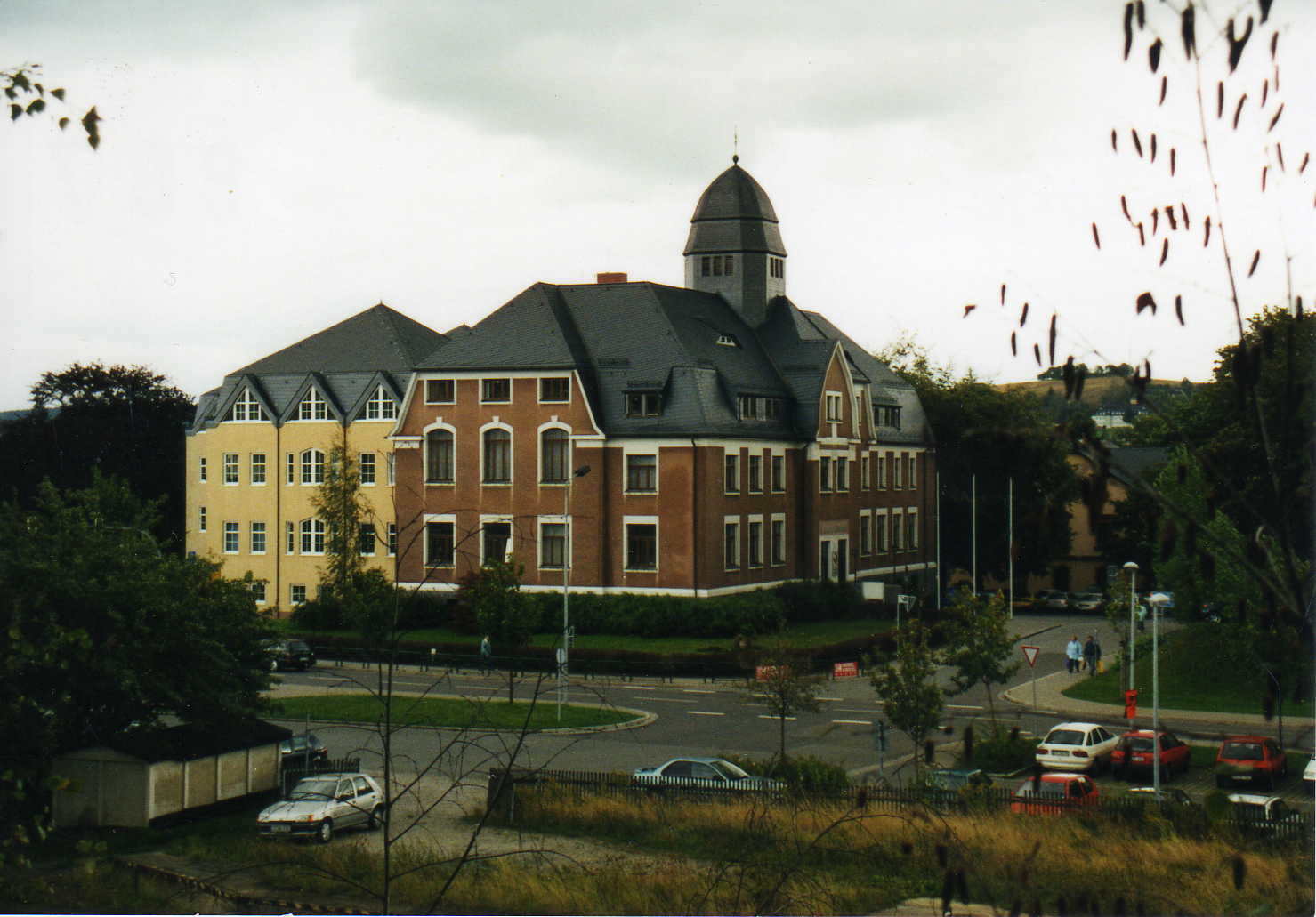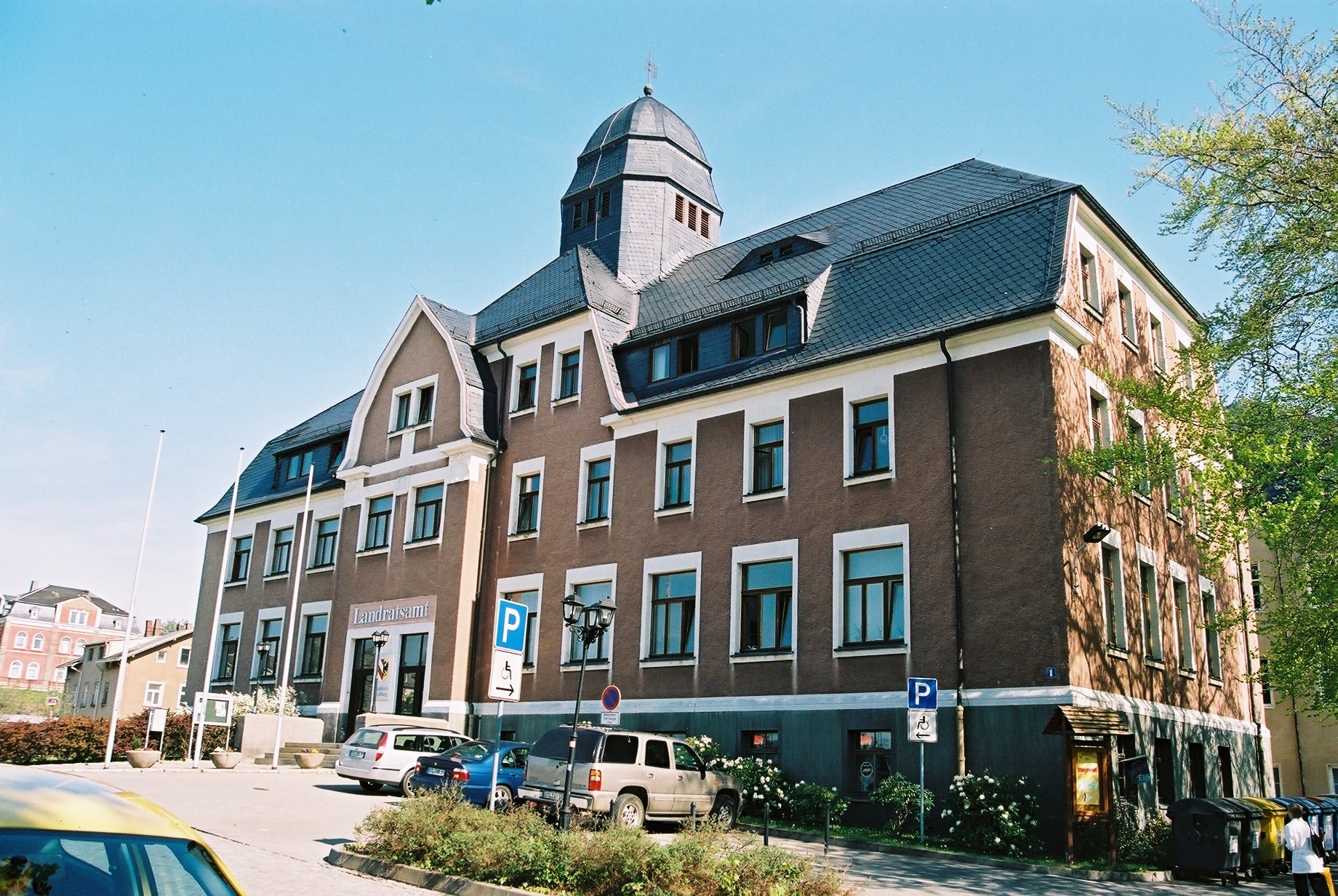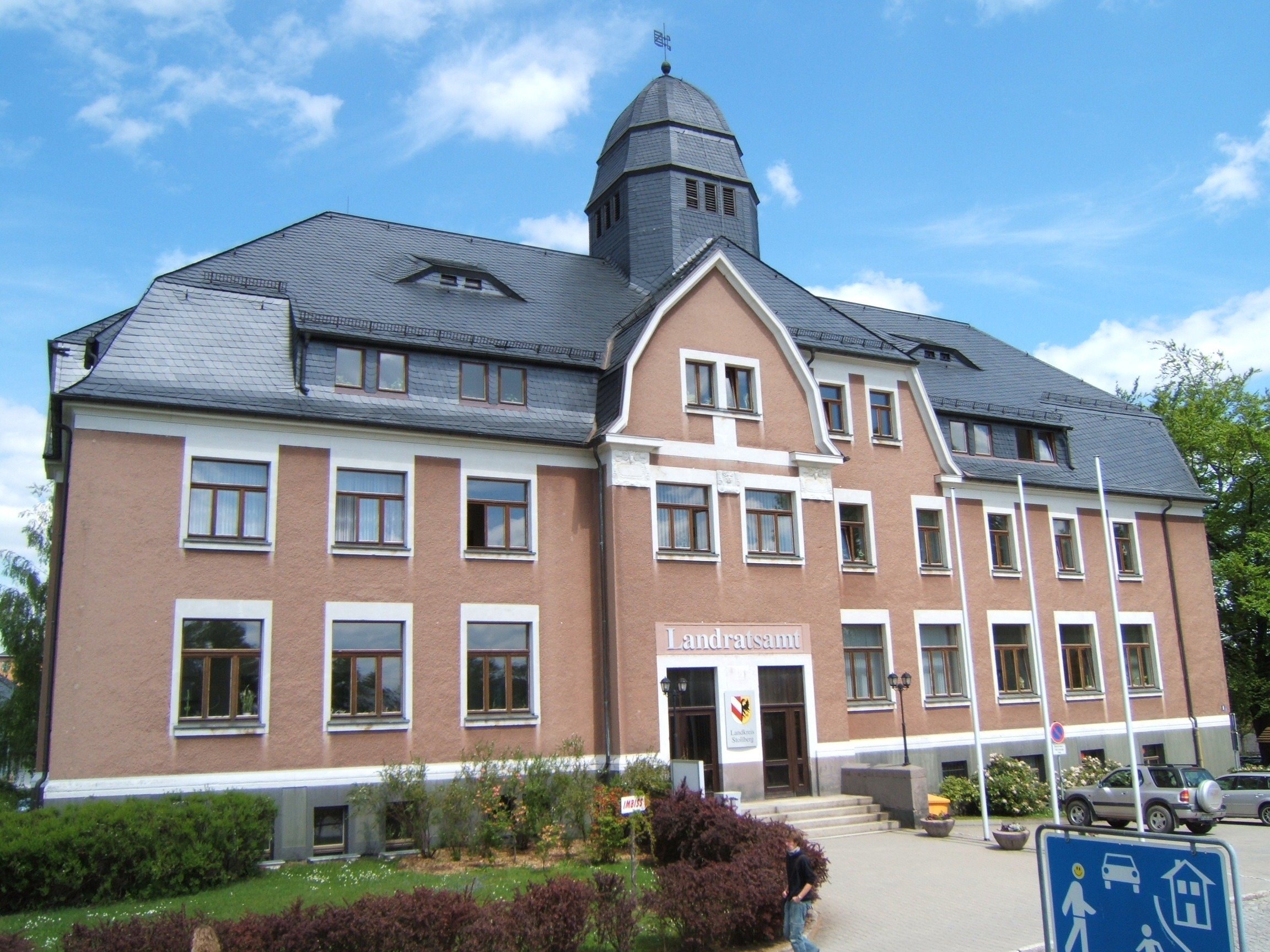
The building with apartments, which was inaugurated on 01.07.1910, was later used as follows:
1910 to 1917 - Königliche Amtshauptmannschaft
1939 to 1950 - Amtshauptmannschaft
1952 to 1990 - Rat des Kreises
1990 - Landratsamt
Stollberg first belonged to the Amtshauptmannschaft Chemnitz and was separated from the Zwickau area in 1900.
The Amtshauptmannschaft was first intended to be located in the Zwönitz valley due to poor train connections. However, on 04.06.1908, permission to build was granted and on 01.07.1910, the Royal Amtshauptmannschaft was inaugurated. There was a large banquet in the hall of the "Weißer Ross", which was located on the market square at the time, with many invited guests from the town and surrounding area. Dr. Fritzsche, who was also the patron of the building, was appointed as the first district administrator.
The joy of the new building did not last too long, as there were problems with the water supply. Sometimes there was no water at all and they had to resort to a well. Bathing was not even possible in the apartments in the building from August 1911 until the beginning of October. On 01.11.1915, permission was granted to convert the northern half of the coach house into a motor vehicle room.
From 1939 onwards, the title of Amthauptmann was changed to Landrat. In this year, the "Schnabel property" was acquired, which initially belonged to the Girokasse. On 12.02.1940, it was inaugurated by District Administrator Dude. However, on April 27, 1940, the district was dissolved by resolution of the Saxon state parliament and with effect from July 1, 1950, the district was divided into Aue, Chemnitz and Zwickau. On 23.07.1952, after two years of dissolution, the district was re-established and was sealed with the administrative reform on 01.09.1952.
On 01.07.1995, the district was able to look back on 85 years of existence. The archive documents from 1940, 1950 and 1964 were moved to the Dresden State Archives. After the end of the Second World War, the collection of files for the years 1939 to 1945 was ordered.
About the construction work
On 17.01.1894, the "birth certificate" of the entire complex was received under the direction of Mayor Lösch for the development of what was then Güterstraße. The development plan was approved by resolution of the council planning meeting on 27.01.1894. The city council's decision to build between the train station and the park was made on May 3, 1900, primarily thanks to the merits of the building and city councillor Karl-Albin Uhlmann in his capacity as a member of the state parliament. The first contract to build the house was signed with master builder Simon on September 28, 1908. 50 companies worked on the various trades, and on August 13, 1910, the company Wagner from Chemnitz received the last order for the iron foundation stone enclosure, which had been removed by the previous construction work. On 19.08.1910, the building was transferred to the newly founded Amtshauptmannschaft.
The stable building and the enclosure were torn down when construction work began in 1989/90. A new section of the old main building was erected to accommodate the large number of departments. The construction phase lasted from 1991 to 1995 and was carried out in two stages.
The building II
The master builder Hermann Ferdinand Meyer erected the building (lower building) on 06.06.1900 in accordance with the building permit. An inspection was carried out on 08.12.1900 and building conditions recorded. Mr. Schnabel appears as the new owner.
On 07.06.1939, the district administration received approval for the conversion and on 12.02.1940, the ceremonial consecration by District Administrator Dude took place. Work continued with restrictions until the district administration was dissolved in 1950. In 1952, the building was returned to the ownership of the district council. The two wooden barracks were replaced by permanent barracks in 1959. The front building was converted into the Wismut FDJ school. It later housed the military district command and the education authority.
The stable building and the enclosure were torn down when construction work began in 1989/90.